

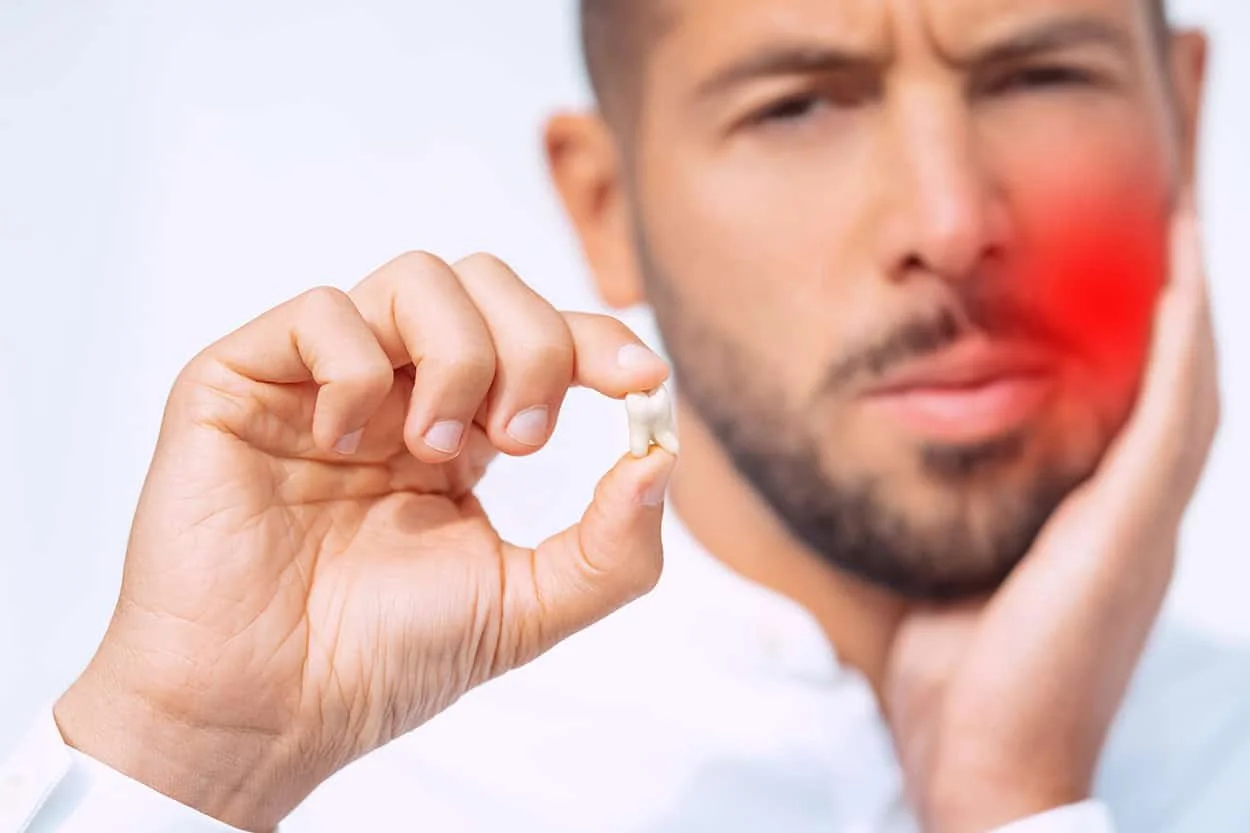
Is there any way to save it now? The seconds and minutes after you knock out a tooth matter more than most people expect. A permanent tooth that has been fully knocked out has a real chance of being put back in place, but only if you move quickly and know exactly what to do before reaching the dentist. The right steps in the first 30 minutes are often the difference between keeping your natural tooth and losing it for good.
Key Takeaways
- A tooth that has been fully knocked out can often be replanted if it is treated within 30 to 60 minutes.
- Always handle the tooth by the crown rather than the root, since root cells are delicate and easily damaged.
- If you cannot place the tooth back in the socket, store it in milk, saliva, or a tooth preservation product.
- Plain water is not the best storage option because it can damage the cells on the root surface.
- Prompt care prevents infection and complications, even when the tooth ultimately cannot be saved.
First Things First: Stay Calm and Find the Tooth
Take a breath, then locate the tooth. Once you have it, pick it up only by the crown, which is the white chewing surface you usually see in the mirror. The other end is the root, and it is covered in living cells that need to stay alive for a successful replant. Even brief contact with fingers, a paper towel, or running water can damage those cells.
If the tooth has dirt or debris on it, give it a very brief rinse in milk or a saline solution. Skip the scrubbing, soap, or chemicals of any kind. The goal is to keep the surface alive, not sterile.
Putting It Back If You Can When You Knock Out a Tooth
When the socket is clean and intact, the most effective thing you can do is slide the tooth back where it came from. Line up the tooth so the crown points the way it normally would, gently press it into the socket, and bite down softly on a clean piece of gauze or a folded paper towel to hold it in place. Replanting right away offers the best possible chance of saving the tooth.
If the idea makes you queasy or the tooth does not slide in easily, do not force it. Move on to the storage step. Plenty of teeth are saved without being replanted by the patient first, so this is not a make-or-break moment as long as you keep moving.
How to Transport the Tooth
If replanting is not realistic, the next priority is keeping the root cells alive on the way to the office. A handful of options work well:
- Cold milk: The protein and mineral balance closely matches the natural environment around a tooth.
- Inside the cheek: Saliva works as long as there is no risk of swallowing, which makes this option best for adults.
- Tooth preservation kits: Sold at many pharmacies and designed specifically to keep root cells alive longer.
- Sterile saline: A solid backup option when milk is not available.
- Skip the water: Plain water breaks down the surface cells on the root and lowers the chance of a successful replant.
Why Every Minute Really Matters
The biology behind a saved tooth is simple. The cells on the root surface stay viable for a short period after a tooth is knocked out, and the longer they sit in the open, the lower the chance they will reattach to the bone. Within 30 minutes, the odds are excellent. After an hour, the chances start to drop more sharply. After several hours, replantation becomes much less reliable.
Phoning ahead and heading straight to the office matters because the dental team can prepare the room before you arrive. Those few extra minutes saved on the front end can directly affect the outcome.
If the Tooth Cannot Be Saved
Some situations make replantation impossible. The tooth may have cracked, the socket may be too damaged, or simply too much time may have passed. Even then, quick care matters. The socket still needs to be examined and treated to prevent infection, and a plan for replacing the tooth should be discussed before bone loss begins to set in.
Options like dental implants, bridges, or partial dentures can restore both function and appearance. Acting early simply gives you more flexibility in how the replacement is approached, since the bone in the area starts to change shape soon after a tooth is lost.
Frequently Asked Questions
What if my child knocks out a baby tooth?
Baby teeth are usually not replanted because doing so can damage the permanent tooth developing underneath. Even so, a quick visit is still important to check the area for any underlying damage.
What if I cannot reach my dentist right away?
Look for an emergency dental practice that handles trauma cases, since most offices set aside time for situations like this. Bringing the tooth in proper storage gives the next dentist you see the best chance of helping.
Stay Calm and Move Fast
Few dental situations carry the same urgency as a knocked-out tooth, but the response in the first hour shapes everything that follows. Stay calm, handle the tooth carefully, store it properly, and get to a dentist as fast as possible. The patients who keep their natural teeth almost always credit their speed and willingness to act in the moment. If you want to learn more about urgent dental care, visit our Emergency Dentist in Foothill Ranch page to schedule a consultation.